
Voter fraud is as rare as hen’s teeth. A Brookings Institute study of vote-by-mail ballot fraud from 2016 to 2022, for example, found just four cases per ten million ballots. But for more than 60 years Republicans have used racist fearmongering about voter fraud to mobilize their base on one hand, while on the other suppressing minority voters they fear will vote overwhelmingly for Democrats.
Low-level operatives have usually done the heavy work, leaving other issues in the media spotlight. But with Donald Trump, it’s different. The myth of widespread voter fraud has become a key article of faith. It drove the J6 insurrection, and could lead to some sort of repeat of this cycle. It’s already been used in failed efforts to disenfranchise thousands, if not millions, of voters and to imprison his political enemies.
Both facets have been on display in Trump’s last-minute Oct. 15 lawsuit against California. Trump’s Department of Justice is seeking to force the state to segregate and not count the ballots of tens of thousands of alleged non-citizen voters. It has also threatened to prosecute officials who do not go along with its racist, illegal and unconstitutional scheme.
“Noncitizen voting in a federal election is a federal crime — and knowingly facilitating such conduct is equally unlawful,” Trent McCotter, the acting deputy attorney general, wrote in a letter to Los Angeles officials on Oct. 16. Trump reposted the letter on social media, adding in a follow-up share, “They will all go to jail for a long period of time!!!”
But the last-minute demand violates multiple laws, as well as long-standing principles, California’s lawyers argued in response. “This amounts to suspending voting rights for thousands of voters who are only suspected of being noncitizens, with absolutely no guarantee that their rights will be restored in time for their votes to be counted,” they argued in a subsequent filing.
Moreover, the number of actual noncitizens voting could be as low as zero — as it was in Nevada, after officials there agreed to a similar process months earlier.
In July, Homeland Security Secretary Markwayne Mullin sent letters to California, Nevada, New Jersey and Pennsylvania, alleging that as many as 270,000 noncitizens were registered in those states — including 190,000 in California. Nevada alone took those letters seriously enough to investigate to the bitter end. Its share of supposed non-citizens was originally 15,903, but that plummeted to 185 when DHS turned over a list it claimed were “confirmed” as “not U.S. Citizens.” But Nevada checked every one and confirmed that they were citizens after all.
So there’s no reason to think DHS has identified any non-citizen voters in California, either. As with Nevada, the number of alleged non-citizens has already shrunk considerably (from 190,000 originally) to the 20,000 figure. This has been followed up with the high-profile arrest of just 11 alleged violators (out of 28 charged), at least two of whom quickly told the media they had never knowingly registered to vote, much less voted.
A 72-year-old pajama-clad Omar Munoz was the featured arrestee in the DOJ’s quickly produced video promoting their paramilitary “protect-the-vote” raids, but Fox 11 quickly reported that he denied either registering or voting, but that he did have a likely explanation — identity theft. “Somebody was working at the chocolate factory with my Social Security and my name, so I know what can happen,” he said.
“It’s disgusting,” Loyola Law School professor Justin Levitt told the Guardian. “There’s no point other than partisan politics behind that sizzle reel. And DoJ is supposed to be forbidden from engaging in partisan politics in their enforcement actions.”
At least six cars of officers kitted out for combat with masks and shields were dispatched to arrest Munoz, who was recovering from six recent surgeries. But after his hearing, he was released on his own recognizance, without supervision, and Trump’s prosecutors did not object — implicitly admitting that Munoz didn’t need to be arrested in the first place, let alone with an overkill display of paramilitary force. All other defendants were released as well.
“This is voter intimidation and a blatant attempt to undermine trust in our midterm elections,” said LA County Supervisor Janice Hahn. “These arrests are being used to paint a picture of widespread voter fraud when we know that is not the case.”
Only 21 of the 28 charged (all green-card holders, not “illegal aliens”) had ever voted, according to the DOJ. That’s less than one in a million California voters. And as the Munoz case shows, it’s far from clear if any of those charged had actually cast any votes.
There will surely be more wild developments in the closing days/daze of the campaign. But these efforts to thwart voting and prevent a blue wave will almost certainly fail on every front — just as Trump’s efforts to overturn the 2020 election failed spectacularly in court. But, like those efforts six years ago, they threaten to fuel a last-ditch effort to prevent newly-elected Democrats from being seated in the new Congress in January. It would be a virtual replay of the J6 insurrection, but with GOP politicians supporting Trump this time, so that outright mass violence may not be needed.
To help make sense of the last-minute madness, it’s useful to keep at least three big-picture frameworks in mind.
The Voter Fraud Fraud
First is the aforementioned history of false voter-fraud claims.
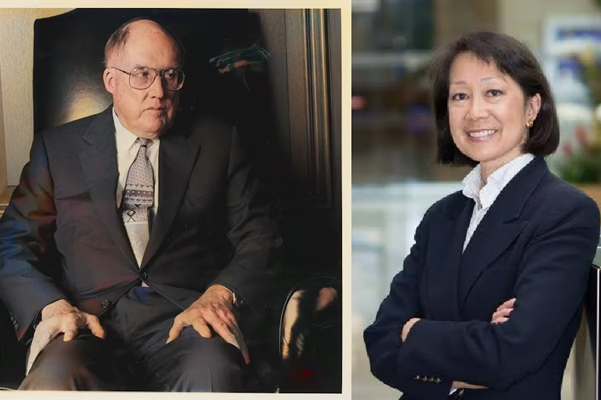
Ever since future Supreme Court Chief Justice William Rehnquist took part in “Operation Eagle Eye” in Arizona in 1962, and then took it nationwide as campaign manager for Barry Goldwater two years later, voter fraud claims used to suppress minority voters have been a recurrent feature of GOP politics. Usually they’re in the shadows, gaining little or no corporate media scrutiny. But they’ve been serious enough in the courts to restrict the Republican National Committee’s activities for more than 30 years — a restriction that lapsed in 2016, just in time for Donald Trump.
Trump played with voter fraud in 2016 to salve his ego when he lost the popular vote to Hilary Clinton by 2.3 million. But he clung to it for dear life when he lost the 2020 election, and he’s never let go of it since. Indeed, thanks in part to Tucker Carlson’s promotion of the racist “great replacement” theory (more on it below), Trump has embraced an even rarer threat — non-citizen voting, which the conservative Heritage Foundation says has happened only at most roughly 100 cases since 2000.
When even the Heritage Foundation—a prime mover behind Project 2025—says that non-citizen voter fraud is a vanishingly small threat, but Trump’s DOJ tries to make it front-page news—and threaten California voting officials with prison—we are well and truly through the looking glass.But it wasn’t always so.
Twenty years ago, a handful of Republican US attorneys were unlawfully fired for failing to pursue bogus voter-fraud claims as part of a scandal that resulted in the forced retirement of Attorney General Alberto Gonzales. Some attorneys were fired for other illegitimate reasons—for prosecuting a crooked Republican officeholder in one case, to make way for a Karl Rove understudy in another. Carol Lam, US Attorney for the Southern District of California, was apparently fired for prosecuting Republican Congressman Duke Cunningham and other GOP allies, and supposedly slacking off on immigration cases and gun cases. But in contrast to these traditional political shenanigans, the voter fraud firings stood out as distinctly different and alarming. They were being fired for not pursuing cases based on a racist conspiracy theory.
At the time, pushing bogus voter-fraud claims was done in the shadows, and exposing them caused a major scandal. Now it’s front and center, as seen in this latest lawsuit. Trump’s obsession with conspiracy theories is a major reason why things changed so much, including one in particular that soothes his injured ego in the wake of his 2020 election loss.
The Great Replacement Theory
The second framework is “the great replacement” conspiracy theory. Spawened in France, it originally claimed that elites either passively or actively are intentionally contriving to replace Europes native population with immigrants from her former colonies. It’s the most prominent of a whole family of conspiracy theories that derive from the 1973 French novel, “The Camp of the Saints.” Some versions are more explicitly antisemitic than others, but all of them mirror the centuries-long pattern of antisemitic narratives that deflect blame away from Europe’s actual wealthy conservative Christian elites and onto Jews.
A fringe theory at first, the great replacement theory gained global media attention as a key obsession and motivation of a string of racist mass murderers spaning the globe from Norway to New Zealand.
Meanwhile, Tucker Carlson—mentioning it in more than 800 episodes—adapted it for a US Republican audience. He reworked the threat into a combination of Latin American and Carribean immigrants (whom Republicans had long targeted) along with Muslims and others from Africa, the Middle East and beyond, who were routinely smeared as terrorists or terrorist-sympathizers. Crucially, Carlson also added the voter-fraud tie-in: Democrats were behind it all, in a quest for what he called “more obedient voters.” This deliberately blurred the difference between legal and illegal immigration, while ignoring the fact that illegal immigrants can’t vote. They face a high risk of prison and deportation if they try—hardly the profile for a “more obedient voter.”
In fact, undocumented immigrants routinely avoid drawing official attention to themselves. Sanctuary city provisions originated with LAPD’s Special Order 40 in 1979 specifically to assure crime victims and witnesses that they could talk to the police without immigration officials being notified. If crime victims are so concerned to avoid notice, why draw attention by registering to vote? It just doesn’t make sense.
But it’s not supposed to. Racist narratives are never intended to make sense of how racial others actually act, they’re intended to dehumanize and demonize them, so that they can’t be thought of as human. Indeed, whites who persist in seeing non-whites as human, with similar hopes, fears and psychologies, are characterized as “race traitors” by hard core believers.
This fantastical worldview imagines armies of irrationally self-destructive actors who miraculously never get caught, and/or a network of puppetmasters who have never had a leak or defection since before the Beatles. In short, it’s utterly absurd.
But beyond fueling voter fraud hysteria, the great replacement theory shapes a whole worldview.
As this reporter explained in Salon in 2021, “If ‘invading hordes of immigrants’ are the enemy, and falling white birthrates are key to the problem, then the right’s misogynist agenda and its xenophobic agenda are much more tightly linked than ever before,” along with connections to Christian nationalism and the Old Testament-based worldview fusing Christian and American identities.
These three major electoral facets of American conservatism are much more tightly unified via the Great Replacement Theory than they ever were by Cold War, Ronald Reagan-style conservatism. “What’s more, the practical need to suppress voters of color becomes a central ingredient,” I noted. Both the tightness of how the different elements are linked and the conspiratorial nature of the framework contribute to an intensity in all facets, driving extremism and the normalization of denigrating women and minorities, especially when they hold positions of power.
Democratic Recovery
The third framework for understanding the midterm elections is that of an attempted democratic recovery. Earlier this year, the V-Dem Institute, which tracks over 600 measures of democratic health, warned that America had dropped 24% on its premier Liberal Democracy Index, “a much faster deterioration process than any other democracy in modern times,” far faster than Russia, Hungary, or India, to name three other prominent examples. This was the most shocking finding in V-Dem’s tenth annual report on democracy worldwide.
America’s score on the LDI was set back more than 60 years, to before the Voting Rights Act protected minority voting rights nationwide. But unlike then, key factors in the decline were the weakening of legislative and judicial constraints on executive power, both of which were set back even farther—to before 1900.
“President Trump’s second term can be summarized as a rapid and aggressive concentration of powers in the presidency,” the report summed up.
“It is a pretty grim picture,” V-Dem founding director Stafford Lindberg told this reporter. “A lot of what’s happening in 2025 is clearly unimaginable in a democracy.”
There was some good news, however. A special section on the US noted three key things that can help reverse such a decline: strong institutional safeguards, robust societal action, and acting early “since most U-turns happen around the end of the first electoral cycle.” While institutional safeguards have been shaky, to say the least, robust societal action—from Tesla Takedowns to anti-ICE mobilizations to No Kings demonstrations and beyond—has been remarkably strong, leaving the midterms looming as the key third ingredient needed to begin restoring our democracy.
This lens helps make sense of a wide range of efforts to repress the vote, and to prevent opposition politicians from taking power if they are elected—or even if they just might be. On the first count, India, for example, recently purged as many as 120 million voters from its rolls. That figure dwarfs anything Trump has attempted. On the second count, we the J6 insurrection, and Trump’s effort to jail critics—most recently Congresswoman Ilhan Omar—almost perfectly echoed in Brazil, among many other examples.
Brazil’s elections just showed that democratic recovery has a chance. Now it’s our turn. First we vote. And then we defend the vote against everything Trump has to throw against it.