
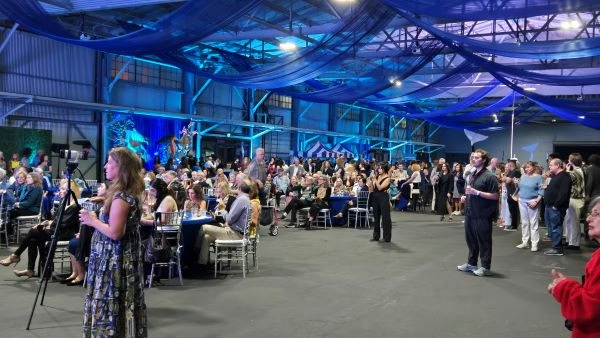
On Oct. 10, AltaSea welcomed more than 500 attendees to its Blue Hour celebration, honoring pioneers in the blue food sector, including celebrity chef and restaurateur Andrew Zimmern, who received the organization’s Innovation Award. Lifetime ocean advocates Philippe and Ashlan Cousteau presented the award.
Zimmern, an Emmy Award-winning television personality, chef and author, has used culinary experiences to promote cultural understanding while advocating for ocean health, sustainability and responsibly sourced food.
“The future of humanity is inextricably tied to the future of our oceans,” Zimmern told the crowd.
“The ocean covers more than 70% of the planet, regulates the climate, produces roughly half of Earth’s oxygen and supports billions of people who depend on it for food and livelihoods,” he said. “Yet, for generations, humanity has treated the ocean as an inexhaustible resource.”
“Well, the bill has arrived,” Zimmern said.
He called for responsible aquaculture, restored wild fisheries, protection of marine biodiversity and sustainable farming of shellfish and seaweed where supported by science. Developing better feeds and production systems, he said, must go hand in hand with ensuring seafood producers earn a decent living.
“We can grow a blue food economy that nourishes people while helping protect the ecosystems that make that nourishment possible,” Zimmern said. “But we have to do it intelligently. We have to measure the impacts. We have to hold ourselves accountable.”
Zimmern warned that warming oceans, strained marine ecosystems, declining wild fisheries and threats to coastal communities are making it increasingly difficult to feed a growing global population.
Some of the most important solutions to the world’s broken food system, he said, may come from the water.
That is where AltaSea comes in. Built on a historic pier with access to the deep ocean, the nonprofit’s 35-acre campus supports ocean science, ocean-related businesses and innovative education programs. It collaborates with local nonprofits, including the LA Maritime Institute, and emerging companies.
Zimmern highlighted AltaSea’s work advancing responsible aquaculture, marine robotics, ocean exploration, renewable energy, cleaner marine transportation and research into carbon storage and climate resilience. The organization also connects researchers, investors and emerging companies to help turn new technologies into businesses that create jobs and address environmental challenges.
Its educational programs introduce young people to careers in marine science and ocean technology, including fields that barely existed a generation ago.
Zimmern emphasized that the blue economy must benefit coastal communities and workers, not just investors and businesses.
“The blue economy cannot become another economy where a handful of people prosper while the communities most dependent on the ocean are left behind,” he said. “Regeneration has to include people.”
He urged attendees to invest in science, people, ideas and institutions developing solutions to the climate and ocean crises rather than leaving future generations to repair the damage.
Blue Hour featured chef demonstrations, culinary creations, live music, entertainment, art made from food, Blue Robotics exhibits and ocean-inspired food and drinks. More than a dozen restaurants and culinary programs, including Los Angeles Harbor College’s culinary division, offered tastings that showcased local food businesses and sustainable dining.
Attendees contributed more than $50,000 to support AltaSea’s Ocean STEM programs, which provide free educational opportunities to students throughout Los Angeles. The programs introduce students to careers in the blue economy, from marine conservation and underwater robotics to clean energy.