
By Lynn Nishimura, Columnist
My previous article was about French cheese. But did you know how many different things can be made from cow’s milk? Cream, cheese, yogurt, butter— and much more.
Today, let’s talk about butter.
Butter is an emulsion of milk fat and water, and the way it is produced can range from beautifully traditional to highly industrial. It can be made by hand in a wooden churn, produced in small batches, or manufactured on a much larger scale.
The result can be unsalted butter, salted butter, or the deliciously rich beurre de baratte, traditionally churned for a distinctive texture and flavor. French brands such as Président, widely available in French supermarkets and in the US, are also commonly found in brasseries and cafés. But if you are on a quest for delicacies and signature products, seeking out butter from a local dairy producer is a wonderful way to discover regional flavors while supporting smaller producers. Buying directly from local producers helps keep more of the economic benefit within the region. This is what is known as the French circuit court approach.
How Is Butter Enjoyed in France?
Butter isn’t necessarily served automatically with a basket of bread, although it certainly can be if you ask!
More often, bread and butter appear alongside a cheese or charcuterie board, or even an oyster platter.
Just as in fine-dining restaurants, you may have seen beautifully presented portions of butter: elegant little pyramids from a local dairy, textured cones, decorative molds, or specialized tools used to create fresh butter rosettes and curls directly onto the plate.
Some artisanal producers still make butter using traditional methods and, depending on the product, raw (unpasteurized) cream. This can give the butter a particularly rich and distinctive character. Interestingly, pasteurization itself has French origins: Louis Pasteur developed the process in the 1860s while working to prevent wine from spoiling. The technique was later applied to milk and many other foods and beverages. As in the United States, France also permits the production and sale of certain dairy products made from raw milk or cream, subject to specific regulations.
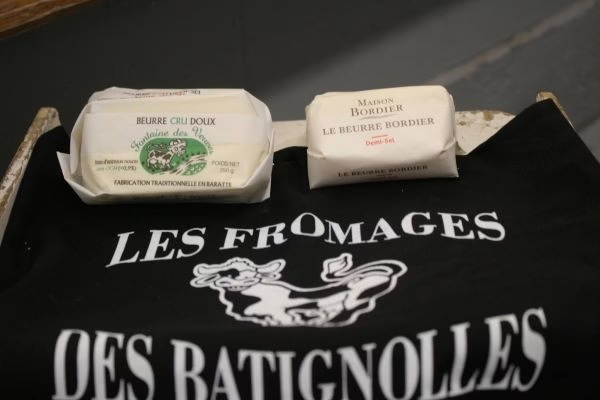
You can also find smaller creameries producing butters flavored with ingredients such as lavender, smoked salt, Brittany seaweed, and Espelette
pepper. Le Beurre Bordier is particularly well known for its wide range of flavored butters.
There are many other excellent artisanal producers as well, and discovering these flavored butters is part of the fun.
In France, butter can become much more than something you spread on toast with homemade jam. It can be an ingredient, a tasting experience, and even a little gourmet souvenir.
Where to Discover French Butter in Paris
If you’re visiting Paris, Galeries Lafayette Gourmet is a great place to explore. On the lower floor, you’ll find an impressive gourmet food market filled with French specialties, gifts, and beautiful products to take home. It’s a wonderful place to browse, even if you don’t necessarily want to spend a fortune. There is also Le Butter Shop, a Paris address known for its selection of local and artisanal butters, including traditional beurre de baratte and other specialty products. It is a fun place to look for harder-to-find French butter and discover smaller producers. And, of course, don’t overlook the small cheese shops and fromageries, where you may also discover regional butters and other local specialties, depending on the producer.
A Few French Butter Terms to Know
French butter comes in several familiar varieties:
Beurre doux — unsalted butter
Beurre demi-sel — lightly salted butter, particularly associated with
Brittany
Beurre salé — salted butter
And then there is beurre de baratte, traditionally churned butter known for its rich, creamy character and distinctive texture.
So have some fun with butter this summer.
Spread it simply on a good piece of bread, pair it with cheese or oysters, use a flavored butter to finish a dish, or incorporate it into a favorite cake or pastry. Sometimes, the simplest French pleasure is just good butter on good bread with cheese.
Or perhaps a classic jambon-beurre—the wonderfully simple French ham-and butter sandwich.
Bon appétit—and enjoy your butter!