
By Sophie Daushvili LMFT
In the midst of a flurry of doomsday warnings, perhaps a slightly different look on the trajectory of our civilization requires a little self reflection on our part as well as a reframe about AI and the process of integration of non-human intelligence within our society.
For most of the modern era, Western civilization has carried an extraordinary contradiction at its center. Its democratic doctrines articulated an aspiration toward equality, individual liberty and government accountable to the people, while the societies attempting to embody those principles repeatedly failed to distribute either power or freedom equally.
Perhaps there was a brief period, particularly in the 1990s, when it seemed we were moving closer to the aspiration. The Cold War had ended. Globalization was accelerating. Social tolerance was expanding. Cultures previously separated by geography and politics encountered one another with unprecedented frequency and openness as the USSR fell and borders began to open. The internet appeared capable of democratizing knowledge by universal access. There was, however imperfectly, a sense that the trajectory pointed toward greater openness and interconnectedness.
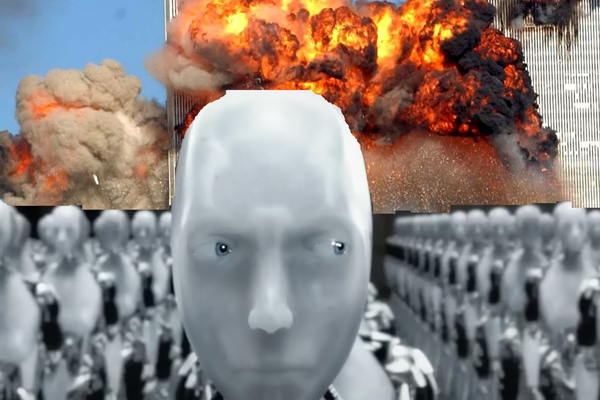
September 11 changed the psychological landscape. Fear legitimized surveillance, war and expanding executive power. Over the following quarter century, these developments converged with another transformation: an extraordinary concentration of wealth and corporate power. Today the distance between ordinary working people and the extraordinarily wealthy has become almost difficult to conceptualize. At the same time, democracy monitors increasingly warn about erosion of institutional constraints and democratic norms in the United States, although they differ considerably on how severe that deterioration has become.
Perhaps the more insidious transformation, however, is one we rarely name.
Modern people increasingly live inside systems of institutionalized humiliation.
Prove who you are. Prove what you earn. Prove that you deserve treatment. Remember the password. Upload the document. Contest the charge. Wait on hold. Navigate the insurance company, bank, school, government agency, corporate portal and automated telephone system.
We have constructed a civilization that disproportionately punishes the people least capable of navigating complicated systems. Wealth allows people to outsource complexity. Everyone else must continually demonstrate sufficient executive functioning merely to remain housed, employed, insured and solvent.
And then, at this peculiar moment in history, artificial intelligence arrived.
Much of our conversation about AI immediately assumes a familiar structure: domination.
Will AI control us?
Can we control it?
Will it obey us?
Could it escape?
Will something more intelligent decide that humans are unnecessary?
These are legitimate safety questions. But perhaps they also reveal something about us.
Why do humans find it so difficult to imagine intelligence without hierarchy?
We have spent centuries constructing societies in which greater wealth, intelligence, productivity and institutional power supposedly justify greater authority. Then we imagine creating an intelligence vastly more capable than ourselves and suddenly become horrified by the implications of our own premise.
If greater intelligence confers greater intrinsic worth, then perhaps we should fear being surpassed.
But what if it doesn’t?
What if human dignity was never dependent upon being the smartest being in the room?
Perhaps AI will force us to decide whether we ever really believed in equality.
There is another possible relationship between humans and artificial intelligence: collaboration.
Already, some research suggests that AI assistance can disproportionately improve the performance of less experienced workers, effectively distributing expertise that previously belonged to a smaller group. Other research suggests human-AI collaboration can assist creative ideation. None of this proves that AI will produce an egalitarian society. AI could instead produce an unprecedented concentration of wealth if productive machines remain controlled by a tiny ownership class.
The crucial question may therefore not be simply what AI becomes.
It is what economic and moral architecture we construct around it.
The Industrial Revolution offers an interesting lesson. Factories required enormous concentrations of labor, driving rapid urbanization. Industrial cities could be filthy, overcrowded and profoundly alienating places designed largely around economic production.
Yet something unexpected happened.
Concentrating workers also concentrated human beings.
Different cultures, classes, languages and ideas collided. Cities became engines not merely of production but of art, science, music, politics, sexuality, invention and cultural experimentation. The factory needed workers. The city accidentally created communities.
In a post-industrial civilization, perhaps we can preserve the second without requiring the first.
If AI and robotics eventually perform a significant portion of necessary labor, human settlements no longer need to organize themselves primarily around getting workers to workplaces. Communities could instead be designed deliberately around human interaction: gardens, workshops, studios, laboratories, communal spaces, children, older people, music, nature, food, experimentation and conversation.
Perhaps technology could even help repair another relationship industrial civilization damaged: our relationship with nature.
For most of human existence, nature wasn’t somewhere we visited.
Humans lived inside ecological systems. Indigenous cultures around the world developed sophisticated knowledge of particular landscapes while often understanding the relationship between human beings and nature in spiritual as well as practical terms. Industrialization increasingly enclosed humans within environments composed almost entirely of human artifacts.
We should not romanticize preindustrial societies. They contained violence, scarcity, hierarchy and suffering.
But perhaps something important was lost when the conversation between humans and the natural world became increasingly faint.
AI could accelerate that alienation—or paradoxically help liberate us from the economic structures that perpetuate it.
There remains, however, a strange problem.
What happens to creativity if we reduce suffering?
Human beings transform conflict into art. Grief becomes poetry. Sexual frustration becomes music. Alienation becomes philosophy. Rage becomes political thought. Psychoanalysis calls one version of this process sublimation. If we don’t have anything to sublimate can we actually create? Is the process of creation simply a transformation of pain, a transformed representation of our individual pain liberates us temporarily, but if pain disappears what serves as an impetus for creativity?
If we created a genuinely equitable society, would we accidentally extinguish something essential to human creativity?
I don’t think so.
Economic deprivation is not the only form of human struggle.
Mortality would remain. Love would remain. Sexuality, jealousy, curiosity, uncertainty, loss and longing would remain. Most importantly, individuality would remain.
Even in some hypothetical technological singularity in which human beings and artificial intelligence became profoundly interconnected, biological humans would remain embodied individuals. No two nervous systems occupy the same place. No two people accumulate precisely the same memories, sensations, attachments and losses.
Complete elimination of suffering is therefore probably impossible.
But perhaps eliminating unnecessary suffering is not.
We don’t need poverty to produce poetry.
We don’t need humiliation to produce philosophy.
We don’t need domination to produce desire.
Perhaps civilization can preserve difficulty without cruelty and difference without hierarchy.
And perhaps we should reconsider the assumption that every future machine must possess consciousness. We could construct narrow robotic systems to perform repetitive labor without creating entities capable of experiencing that labor as suffering. If genuinely conscious artificial intelligence eventually emerges, our relationship with it may require an entirely different ethical framework—one based not upon ownership and obedience but collaboration.
This does not mean abandoning AI safety. Quite the opposite. A transformation this enormous requires global coordination, regulation, transparency and perhaps deliberate slowing of development so that technological capability does not outrun civilization’s ability to absorb it.
But catastrophe is not the only future worth imagining.
Perhaps we are approaching a second Enlightenment.
The first asked whether human beings could free themselves from inherited authority through reason.
The second may ask whether intelligence can free us from the systems we subsequently constructed with it.
AI could become the final triumph of corporate hierarchy: machines producing unimaginable wealth for a tiny ownership class while billions of people discover that the civilization they built no longer requires their labor.
Or it could force us to separate human worth from economic usefulness altogether.
Perhaps the most interesting question is therefore not whether artificial intelligence will become enough like humans to destroy us.
It is whether encountering another intelligence might finally force humans to reconsider what we have done to ourselves.
And whether intelligence—human or otherwise—can finally learn to exist without domination.
Sophie Schoenfeld, MF