
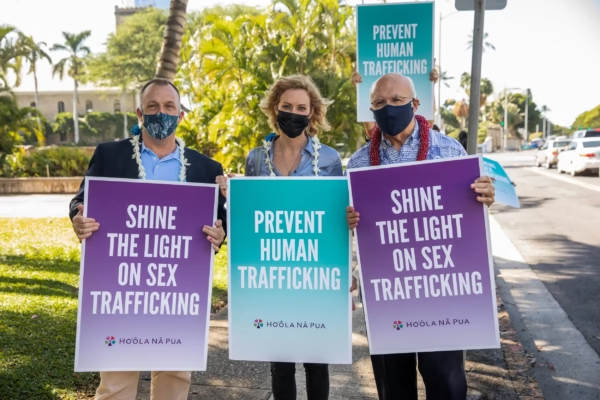
LOS ANGELES — In recognition of National Human Trafficking Prevention Month, the Los Angeles County Department of Consumer and Business Affairs’ Office of Labor Equity or OLE launched a public awareness campaign to highlight the often-hidden realities of human trafficking and labor exploitation. The campaign includes the release of a new video, ‘After the Disaster: Know the Signs of Human Trafficking,’ which examines how moments of crisis can create dangerous opportunities for trafficking.
Human trafficking is a crime involving the use of force, fraud, or coercion to exploit a person for labor or services. It does not require crossing borders or violence and can occur in any community. In many cases, trafficking does not look like what people expect. It may appear as a job offer, temporary work, or help during a difficult time. Immigrants and workers in certain industries, including domestic workers, construction workers and day laborers, hospitality workers and others, are particularly vulnerable.
Risk of trafficking often increases after disasters. When people are displaced, seeking work or trying to rebuild, they become more vulnerable to exploitation.
‘After the Disaster: Know the Signs of Human Trafficking’ features survivor and advocate Miranda, who was trafficked after the 2018 Camp Wildfire in Butte County, along with expert insight from Rose Basmadzhyan, OLE deputy director. The video helps viewers understand how trafficking and labor exploitation can take different forms, how to recognize the warning signs and how to get help or report concerns.
As part of its monthlong public awareness campaign in January, DCBA will share tips and resources on preventing human trafficking at dcba.lacounty.gov and on social media @LACountyDCBA.
As Los Angeles County prepares for large events like the 2026 FIFA World Cup and the 2028 Summer Olympics, demand for temporary labor in industries already vulnerable to exploitation will increase.
Five common warning signs of labor exploitation and human trafficking include:
- Personal Identification: A person’s passport, ID or documents are taken away and held by someone else
- Constant Surveillance: Being closely monitored or controlled by another person
- Pay and Threats: Not being paid what was promised or being threatened with deportation or harm
- Unsafe Work Conditions: Working in dangerous conditions without proper gear, training or breaks
- Loss of Financial Control: Not having control over your income or being afraid to talk about work with others
If you or anyone you know is being coerced or forced into any activity – whether it is commercial sex, housework, farm work, construction, factory, retail, restaurant work or any other activity – call the National Human Trafficking Hotline at 888-373-7888 or text “HELP” to 233733. The hotline is free and confidential. Anonymous calls are welcome, and services are provided in more than 200 languages.
Reports can also be made to the DCBA Office of Labor Equity:
- Online: dcba.lacounty.gov/stophumantrafficking
- Email: dhumantrafficking@dcba.lacounty.gov
- Phone: 800-593-8222